

Might Stanley Hauerwas help Redeem America?
Redeeming America’s Future 3

I have not embraced virtue ethics. Nor have I been attracted to obeying rules or laws as the deontologists do. One of my colleagues once sneeringly gibed, “Ted, you’re a decisionist.” After that, I felt dirty, like I might need to shower.
Instead of virtue theory, the ethical hat I like to wear looks more like teleology or axiology. Borrowing from Jesus’ promise that the coming Kingdom of God will define all of reality, I have thought we should begin with a vision of a transformed future. Perhaps even God’s promised future. Instead of “MAGA,” what I prefer written on my baseball cap would be, “Thy Kingdom Come.”
All along, I have thought that an inspiring ethical theory, one that lifts a vision of a redeemed future, could guide us along the road toward transformation. If ethics refers to making decisions and taking actions to make the world or a part of it a better place, the first ethical step would be to project a vision of what the world should look like in the future. That vision points us to the summum bonum; the highest value; the good that orients the plans we make along with our efforts to effectuate them.
My term for this method is eschatological ethics or, more precisely, proleptic ethics (Peters, 2015, Chapter 14). Beginning with a vision of God’s promised future, the prolepticist formulates middle axioms that bridge an ideal vision of the good with values we can call upon to orient practical action.
As I think about the current American crisis, however, I wonder if proleptic ethics is the cap I should wear. I pause to ask whether or not our virtue ethicists just might offer a better fit.
What is the root malady of America’s current crisis?
What is the root malady of America’s current crisis? One might answer: the wrong political party is in power. I believe this is a misdiagnosis.
Based on the symptoms, I tender the following diagnosis: today’s political leaders are incompetent, corrupt, cruel, and so hungry for power that they are willing to sacrifice not only democracy but the livelihood, if not the very lives, of innocent people to secure their dominance.
The only therapy for this malady is either conversion to virtue or replacement with other leaders who are virtuous. “Virtues are stable dispositions that require habituation,” avers GTU professor Braden Molhoek (Molhoek 2022, 402). America simply aches for leaders of personal integrity who habitually act out of a disposition of compassion, care, competence, and commitment.
Might Stanley Hauerwas help?
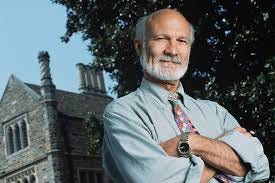
One of my GTU doctoral students, Antoinette Bailey, prescribes Duke University theologian and ethicist, Stanley Hauerwas. Might Stanley Hauerwas help here? After all, Hauerwas is a virtue theorist who envisions a community of character. Might we withdraw public theology from Hauerwas’ ethical account?
On the one hand, Stanley Hauerwas looks a bit like other public theologians. He affirms that the church should contribute to the well-being of society beyond the church.
“Christ’s humanity means that no account of the church is possible which does not require material expression that is rightly understood as a politics. Church matters matter not only for the church; but we believe what is a necessity for the church is a possibility for all that is not the church” (Hauerwas, Approaching the End, 2013, 85).
The ecclesial witness to the non-ecclesial public turns Hauerwas’ ecclesiology into a public theology. At least according to Antoinette Bailey. “Hauerwas’s argument that one cannot have a just polity without a just people recognizes the public implications of our often misunderstood private morality” (Bailey 2025). Accordingly, otherwise private religion takes on public meaning through witness.
This witness to the wider public may look like the pursuit by other public theologians of a global common good (Peters, 2018). But pause for a moment.
On the other hand, Hauerwas does not define the well-being of the larger society in terms of a common good as our global community might define it. Hauerwas is not looking for a common language to which church-speak could contribute to secular or international discourse. Not at all. Rather, for Hauerwas, the church as a community of character witnesses to that which transcends and even judges secular self-understandings.
The self-understanding of the modern state, for example, is that it is sovereign. In fact, the claim of sovereignty of the state is that it can take the lives of its soldiers by sending them to war. In short, the state issues the license to kill. This justification of war on the basis of political self-understanding stands in rank opposition to the lordship of Jesus Christ. The Lord Jesus Christ issues a license to love, not kill. The moral responsibility of the church, then, is to witness to the true king of kings and lord of lords.
“The church’s first duty to the societies in which she finds herself is, therefore, the same duty she has to her Lord. That means the church’s witness to the lordship of the Crucified One cannot let local obligations to one state lead her to treat those in another state as an enemy” (Hauerwas, Approaching the End, 2013, 27).
Hauerwas is thinking globally here. Not nationally. Christians dare not let their patriotism turn into the kind of nationalism that justifies war against other nations.
Not unlike my treatment of proleptic ethics, Hauerwas relies upon God’s eschatological future to retroactively justify the church’s presence as an alien resident within today’s geopolitical understanding of the nation state (Peters, God--The World’s Future, 2015). Haurwas calls this “apocalyptic politics.”
“Apocalyptic politics is based on the confidence that God uses the power structures of this world in spite of themselves for God’s purposes. Christ carries out the purposes of the One who is sovereign by ruling over the rebellious structures of the universe. That rule is hidden but made visible through the servant church. The place of the church in the history of the universe is the place where Christ’s lordship is operative” (Hauerwas, Approaching the End, 2013, 27).
The church is a community of character that witnesses to the wider global public
To witness now to God’s future requires that faithful Christians become personally virtuous and that the Christian church become a community of virtuous character. By respecting primarily the eschatological lord of lords and king of kings, the church will stand in prophetic judgment against present injustices and provide a vision of what the future kingdom of God will be.
The proponents of political theology are therefore right to claim that the meaning and truth of Christian convictions cannot be separated from their political implications. They are wrong, however, to associate “politics” only with questions of social change. Instead, the “political” question crucial to the church is what kind of community the church must be to be faithful to the narratives central to Christian convictions. Any community and polity is known and should be judged by the kind of people it develops. The truest politics, therefore, is that concerned with the development of virtue (Hauerwas, 1981, 2).
Does a community of character rely upon individual sanctification?
For the church to perform such a witness to the larger global community will require sanctification. It will require what the Methodist tradition has long advocated, namely, the road toward Christian perfection. “Methodism could make a real contribution to our common life as Protestant Christians if we took seriously the ecclesial implications of Wesley’s stress on sanctification” (Hauerwas, Approaching the End, 2013, 93).
What is sanctification? It is the road toward getting up each morning with nothing but God’s love on the day’s agenda. A sanctified person is a virtuous person. A church made up of sanctified Christians is a community of character. Here is the Methodist founder and fount, John Wesley.
Sanctification begins “in the moment a man is justified. Yet sin remains in him...till he is sanctified throughout“ (Wesley 1952, 33). “Pure love reigning alone in the heart and life, this is the whole of scriptural perfection” (Wesley 1952, 52).
I find John Wesley inspiring.
However, there is a risk that Hauerwas’s proposal might become a trap. For the Hauerwas proposal to work, it seems to require that the community of character be “sanctified throughout.” Or, at least almost. So I ask: what if justified Christians within the church fail to progress toward sanctification to a level where the witness becomes inspiring to those outside? What if church members succumb to the temptations of secular living and even – dare we say it? – Christian nationalism? Will the church then be rendered anemic if not impotent to provide its witness to the larger public?
Critics such as Russell Johnson complain that Hauerwas’s ecclesiology borders on the sectarian, removing the Christian witness from shared discourse in the public square.
“Christians need to be willing and able to reach beyond speaking Christian and express Christian insights in the languages of contemporary moral deliberation. However, we may be surprised to find that speaking Christian reaches audiences that our well-intentioned attempts at bilingual expression fail to reach….As political theologians engage with the world with the best tools of social analysis, we should nevertheless be open to being surprised by the Spirit who preaches in tongues of flame” (R. P. Johnson 7/2020, 461).
Most public theologians, in contradistinction from Hauerwas, ask for discourse clarification in the public square brought by prophetic religious spokespersons who can be understood outside the sanctuary. “Our challenge,” intones former Harvard Divinity School dean, Ronald Thiemann, “is to develop a public theology that remains based in the particularities of the Christian faith while genuinely addressing issues of public significance” (Thiemann 1991, 19).
Might American Civil Religion sustain an American Community of Character?
I’m attracted to Hauerwas’s community of character concept. But I would like it applied to American culture, not the church. Oh yes, the Christian community should incarnate the character Hauerwas describes. But, as a public theologian, I ask whether it could fit a national society as well.
For America to become a virtuous community of character, it need not become fully sanctified. Short of complete sanctification, American culture could drink from the deep well of classic Christian and Enlightenment values that are the undercurrent of American civil religion. American culture could, if it so decides, lugubriously pour high-minded values into vessels such as policies, laws, institutions, business practices, and communications.
After all, America’s founding begins with belief in a value-laden proposition that all human persons are “endowed by their Creator with certain unalienable Rights, that among these are Life, Liberty and the pursuit of Happiness.” Yes, it took a century-long struggle, replete with a Civil War, to apply these rights to all persons. Yet, liberation from slavery could not have happened without a community of character within the larger community struggling to make it happen. Can we call once again on that community to rise up and re-establish these rights?
How should the church witness within an American community of Character?
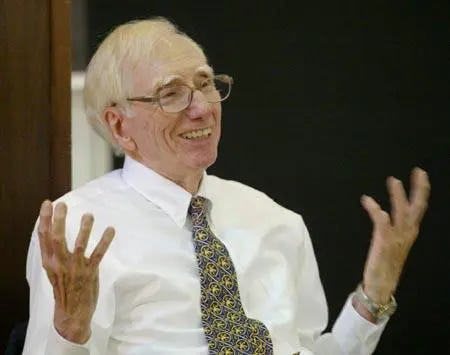
The larger American society even with its civil religion does not replace the distinctive Christian witness Hauerwas asks for. Is there overlap? Yes, indeed, according to the late Robert Bellah at the University of California, Berkeley. American civil religion, “while not antithetical to and indeed sharing much in common with Christianity, was neither sectarian nor in any specific sense Christian” (Bellah 1970, 175).
Key to grasping how civil religion constitutes what Paul Tillich would call the “substance of culture” is society’s reliance upon transcendent judgment (Tillich 1951-1963, 3:158). The value we know as human dignity is transcendentally grounded in God’s imputing dignity to each precious person.
“I would argue that the civil religion at its best is a genuine apprehension of universal and transcendent religious reality as seen in or, one could almost say, as revealed through the experience of the American people” (Bellah 1970, 179).
Newcomers arriving on America’s shores with the intent to make this land their permanent home tend to appreciate civil religion. Why? For two reasons. First, commitment to every person’s dignity provides a safety net for those who still feel marginalized. Civil religion becomes a form of self-protection if not a path to self-advancement. Second, Muslims, Hindus, and nonbelievers quickly become missionaries, applying unalienable rights wherever rights seem compromised.
In God we trust. Really?
America’s answer to the Nicene Creed is the Pledge of Allegiance. What does the motto “In God we trust” mean here? Why do we include the phrase “under God” in the Pledge to the flag? Does God care? Here is Robert Bellah’s answer.
“Though the will of the people, as expressed in majority vote, is carefully institutionalized as the operative source of political authority, it is deprived of an ultimate significance. The will of the people is not itself the criterion of right and wrong. There is a higher criterion in terms of which this will can be judged ; it is possible that the people may be wrong. The president’s obligation extends to the higher criterion” (Bellah, Civil Religion in America 1967,2005, 43).
Note: “the president’s obligation extends to the higher criterion.”
Does this reverence for God render civil religion complete in itself? Does America replace the church? By no means. The church dare not retreat from the kind of witness that even Hauerwas would assign to it.
“The church is above all the body of Christ--the embodiment of its truth--and it cannot be discerned through counting those who assent to certain dogmas. The life of the church has been its capacity to produce human beings who base their lives on the paradigm of the Gospels, the saints and martyrs, even modest and hidden ones, who have constantly renewed it and are renewing it today” (Bellah, 1970, 221).
In sum, an ecclesial community of character contributes to the civil community of character as both complement and critic.
Conclusion
The root malady of America’s current crisis is a malignant leadership that is narcissistic, corrupt, cruel, and hypocritical. America’s public blatherkites are hypocritical because they employ the high-minded language of justice while performing the most unjust forms of graft, grift, and grotesque cruelties.
If this is the diagnosis, what is the cure? The cure is a redeemed leadership made up of virtuous persons supported by a national community of character. Can we convert the current unjust leadership? Or should we replace the current unjust leadership with individuals exhibiting personal virtue and support them with an American community of character?
In this brief post, I have turned to virtue theorist Stanley Hauerwas and civil religion theorist Robert Bellah. Might past investments of Christian church witness in the cultural account of civil religion pay off once again?
Substack PT 4011 Might Stanley Hauerwas help redeem America?Redeeming America’s Future 3
Patheos PT 3282 Corruption and Cruelty without Conscience
Substack PT 3283 Antisemitism and Scapegoat Confuzzlement
Substack PT 3284 Between Paul Revere and Chicken Little
Substack PT 3285 Prophetic Preaching to America in Crisis
Substack PT 3286: White House Fascism and Moral Injury. If you feel badly, you’re not yet broken
Substack PT 4007 Redeeming America’s Justice ONE. The U.S. Department of Just-Us
Substack PT 4008 Redeeming America’s Justice TWO. The U.S. Department of Just-Us
Substack PT 4009 Redeeming America’s Justice THREE. The U.S. Department of Just-Us
Substack PT 4010. Redeeming America’s Humanitarian Care: Comparing compassion, cruelty, and callousness
Substack PT 4012 Love as a Political Program. Redeeming America’s Future 4
Substack PT 4013 Love Melts Ice. Redeeming America’s Future 5
▓
Meet Ted Peters. For Substack, Ted Peters posts articles and notices in the field of Public Theology. He is a pastor in the Evangelical Lutheran Church in America and emeritus professor at Pacific Lutheran Theological Seminary and the Graduate Theological Union. His single volume systematic theology, God—The World’s Future, is now in the 3rd edition. He has also authored God as Trinity plus Sin: Radical Evil in Soul and Society as well as Sin Boldly: Justifying Faith for Fragile and Broken Souls. He recently published. The Voice of Public Theology, with ATF Press. See his website: TedsTimelyTake.com and Patheos blog site.
▓
References
Bailey, Antoinette. 2025. A Virtue Ethics Approach to Public Theology:. Student Term Paper, Berkeley GTU: Unpublished.
Bellah, Robert. 1970. Beyond Belief. New York: Harper.
Bellah, Robert. 1967,2005. “Civil Religion in America.” Daedalus 96:1; 134:4 40-55. https://www/jstor.org/stable/20028013.
Hauerwas, Stanley. 1981. A Community of Character: Toward a Constructive Christian Social Ethic. Notre Dame IN: University of Notre Dame.
—. 2013. Approaching the End: Eschatological Reflections on Church, Politics, and Life . Grand Rapids MI: Eerdmans.
Johnson, Russell P. 7/2020. “Doing Justice to Difference: Stanley Hauerwas and Public Theology.” Modern Theology 36:3 448-461.
Molhoek, Braden. 2022. “The scope of human creative action: Created co-creators, imago Dei and Artificial General Intelligence.” HTS 78:2 1-7; https://doi.org/10.4102/hts.v78i2.7697.
Peters, Ted. 2015. God--The World’s Future: Systematic Theology for a New Era. 3rd. Minneapolis MN: Fortress Press.
Peters, Ted. 2018. “Public Theology: Its Pastoral, Apologetic, Scientific, Politial, and Prophetic Tasks.” International Journal of Public Theology 12:2 153-177; https://brill.com/search?q2=Public+Theology%3A+Its+Pastoral.
Thiemann, Ronald F. 1991. Constructing a Public Theology: The Church in a Pluralistic Culture. Louisville KY: Westminster John Knox.
Tillich, Paul. 1951-1963. Systematic Theology. 1st. 3 Volumes: Chicago: University of Chicago Press.
Wesley, John. 1952. A Plain Account of Christian Perfection. London: Epworth.