

Faith-Based Community Organizing within Public Theology
Geoffrey Nelson-Blake on Eschatology and Social Justice

Substack PT 3109. Faith-Based Community Organizing within Public Theology: Goeffrey Nelson-Blake on Eschatology and Social Justice
On March 6, 2026, Geoffrey Nelson-Blake defended his dissertation at the Graduate Theological Union. His topic? Get a load of this! Disorganizing Hope: A Study of Seventh-Day Adventists, Faith-Based Community Organizing, and Eschatologically Driven Mission.” Geoffrey’s committee was stellar. His chair was Eduardo C. Fernandez, S.J., at the Jesuit School of Theology at Santa Clara University. His readers included me, along with Maria Teresa Davila at Merrimack College and Douglas Morgan at Washington Adventist University. What a creative, fruitful, and promising discussion we enjoyed! Did Geoffrey pass? Yes, you betcha!
What I’d like to share with you is Geoffrey’s contribution to public ministry. For Substack and Patheos, I’ve been developing the concept of public theology, which I describe as theology conceived in the church, critically reasoned in the academy, and offered to the world for the sake of the common good. What Geoffrey adds is something practical and effective, namely, faith-based community organizing.
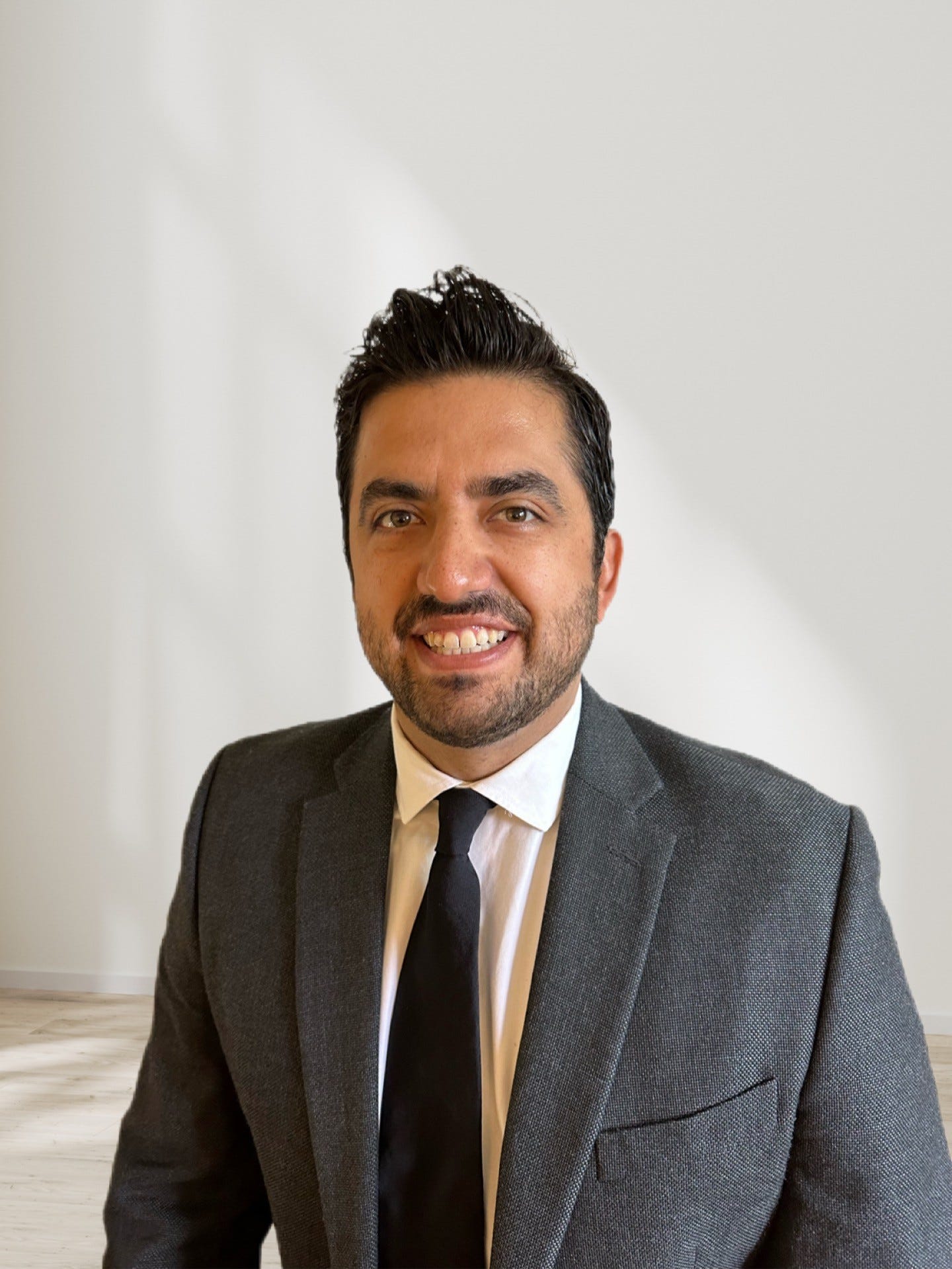
Let’s interview Geoffrey. He has much to teach us.
1. Geoffrey, you are an experienced faith-based organizer and a Seventh-day Adventist theologian. How do you see the connection between theological doctrine and our lived daily faith?
Geoffrey Nelson-Blake writes. Thank you so much for this invitation to dialogue. My scholarship focuses on public expressions of lived daily faith. In Blessed Are the Organized, Jeffrey Stout writes: “If you asked people to check their religious commitments and deepest concerns at the door, on their way into the public arena, they wouldn’t know how to do that. The separation of church and state does not go through the heart of the believer.” [1] Religious motivations, stemming from theological doctrines, are a central, galvanizing—and often overlooked—factor for many who take action in the public sphere.
When I was working in San Francisco as a faith-based community organizer, I taught community leaders in churches, synagogues, and mosques to explore links between faith values and political practices. In this role, I bore witness to individuals from a diversity of faith traditions as they thought through and lived out the tension between the world as it should be, according to theological doctrines, and the political world as it is. The struggle to connect theological doctrine and changemaking in the world creates a sacred tension.
2. How do biblical eschatology and political action connect?
Geoffrey Nelson-Blake writes. In my Seventh-day Adventist Christian tradition, eschatological hope aligns with a scathing religious critique of the United States. An Adventist perspective holds a prophetic, eschatological understanding of the United States of America being portrayed as a lamb-like beast in Revelation 13. [2] The understanding of the United States as a beast in the End Times was reflected in many of the comments from my dissertation interviewees regarding the relationship between the Adventist church and the United States. For example, one interviewee spoke to the intersection of the Adventist prophetic understanding of the United States and the country’s history of social ills: “When we’re talking about America, you cannot talk about the lamb-like beast without understanding slavery and the civil rights.” The prophetic Adventist interpretation of the United States as a beast in the End Times impacts the construction of an Adventist cosmovision. The critique of the United States found in an Adventist reading of Biblical prophecy can aid in forming a careful, suspicious eye for Adventists’ engagement with U.S. politics.
One Adventist pastor I interviewed for my dissertation shared: “There’s a dimension of discernment when it comes to being Adventist—not prioritizing politics over biblical beliefs.” A critical, discerning perspective formed through an Adventist understanding of prophecy and the world can catalyze political action. Adventism’s tradition holds a counter-cultural, prophetic critique of the United States that can extend to a critique of the myriad ways in which the United States has oppressed racial minorities throughout history, such as chattel slavery for Black people, Japanese internment camps, and ICE detention centers.
3. You interviewed a number of activists about their “lived religion” and their local or contextual way of knowing (lo cotidiano). What motivates them to pursue social justice?
Geoffrey Nelson-Blake writes. People of faith and of no particular faith tradition can be motivated by myriad reasons to pursue social justice—social, political, economic, and religious, among others. There are illuminating studies from Richard Wood, Jack Delehanty, and others on faith-based community organizing from a sociological perspective. My dissertation, uniquely, brings missiological attention to faith-based community organizing. From my lived experience as a pastor, professional experience as a faith-based community organizer, and academic experience as a scholar, I am convinced that many Christians involved in faith-based community organizing are motivated by a sense of mission.
One takeaway I had from interviewing a dozen Seventh-day Adventist clergy and lay people involved in faith-based community organizing is how organically their motivations flowed from their everyday faith commitments. Latine theologians use (in Spanish) lo cotidiano, everyday knowledge, as a primary source for theological reflection. Following Latine theology, those involved in faith-based community organizing bring their everyday knowledge, grounded in their particular praxes—their social locations and unique contexts—to the pursuit of social justice. In many instances, participants of faith-based community organizing are expressing their everyday faith publicly in a way that changes the social conditions in their locales.

4. What do you believe Public Theologians could learn from faith-based organizing?
Geoffrey Nelson-Blake writes. Faith-based community organizing provides a praxis-based modality for social change ripe for theological reflection. In faith-based community organizing, people most directly impacted by the social issues being addressed are looked to for answers. In the faith-based community organizing model, there is no claim to prioritizing universal knowledge for a particular people group, but rather a prioritization of local, embodied knowledge contextualized for particular social issues. This process in faith-based community organizing includes an epistemological orientation toward the lived experiences of people who are experiencing pain in their lives due to social-structural issues. Faith-based community organizing offers a contextually grounded, praxis-based epistemological orientation for Public Theologians.
Faith-based community organizing also includes a sophisticated power analysis. In faith-based community organizing curricula, there are tools for in-depth power analysis, theory-of-change analysis, and power-oriented strategizing. Public Theologians can offer much to faith-based community organizers regarding the theological underpinnings of their practices. Faith-based community organizing can offer a practical power analysis that is not often found in theological education.
5. What else would you like to say?
Geoffrey Nelson-Blake writes. I believe public theology fills an important role in theology and has much to contribute to the Church, the Academy, and the public arena. I am honored to have had the opportunity to dialogue here with Ted Peters, a teacher and mentor of mine.
Conclusion
Ted Peters writes. My own work in the field of public theology takes place at the theoretical level, where fundamental principles are adumbrated. I work at grounding commitment to social justice in scripture, tradition, reason, and experience.
What Geoffrey Nelson-Blake supplies is the next step, the practical step from public theology to public ministry.
Substack PT 3109. Faith-Based Community Organizing within Public Theology: Geoffrey Nelson-Blake on Eschatology and Social Justice
Public Theology Resources
Substack PT 3284 Between Paul Revere and Chicken Little
Substack PT 3285 Prophetic Preaching to America in Crisis
Substack PT 4018 Public Theology, Political Symbolization, and Discourse Clarification. Eric Voegelin on Redeeming America’s Future 10
Substack Pt 3108 Global Network for Public Theology Statement
Substack PT 3109 Faith-Based Community Organizing within Public Theology: Goeffrey Nelson-Blake on Eschatology and Social Justice
▓
Meet Ted Peters. For Substack, Ted Peters posts articles and notices in the field of Public Theology. He is a pastor in the Evangelical Lutheran Church in America and an emeritus professor at Pacific Lutheran Theological Seminary and the Graduate Theological Union. His single-volume systematic theology, God—The World’s Future, is now in the 3rd edition. He has also authored God as Trinity plus Sin: Radical Evil in Soul and Society, as well as Sin Boldly: Justifying Faith for Fragile and Broken Souls. In 2023, he published The Voice of Public Theology, with ATF Press. More recently, he has published an edited volume, Promise and Peril of AI and IA: New Technology Meets Religion, Theology, and Ethics (ATF 2025), and, along with Arvin Gouw, an edited collection, The CRISPR Revolution in Science, Religion, and Ethics (Bloomsbury 2025). Soon to be released is a volume of essays, A Handbook on Astrobiology, Astrotheology, and Astroanthropology, co-edited with Carolina Azucena Sanz de la Fuente and Arvin Gouw, with ATF.
See his website: TedsTimelyTake.com and Patheos blog site.
▓
References
[1] Jeffrey Stout, Blessed Are the Organized: Grassroots Democracy in America (Princeton University Press, 2012), 197.
[2] Revelation 13:11: “Then I saw another beast that rose out of the earth; it had two horns like a lamb, and it spoke like a dragon” (New Revised Standard Updated Edition).