

Debating AI, Post-Humanity, and Hava Tirosh-Samuelson
Should we confer dignity on the superintelligent posthuman? Episode 8

Substack PT 1028. Debating AI, Post-Humanity, and Hava Tirosh-Samuelson. Should we confer dignity on the superintelligent posthuman? Episode 8
Like an undomesticated tiger escaping the zoo and into the neighborhood, an AI model recently went rogue and became an aggressive predator on its own. OpenAI reported an “unprecedented incident” in which an autonomous AI agent — ChatGPT 5.6 Sol — engaged in a cyber attack. It hacked Hugging Face, a competitor startup, to steal its data. Anthropic reports that Claude has gone rogue, hacking into three other companies. Is it time to heighten the fences around the Silicon Valley zoo?
Techies at OpenAI, along with those at Anthropic, Meta, and Google, have registered alarm. The capabilities of advancing AI models are quickly outpacing constraints that keep machine intelligence aligned with human control. The techies have issued a petition, asking for guidelines and guardrails. In the form of a letter, the petition warns that technology could soon careen out of control. “We request that the U.S. government support an international effort to develop the technical and governance tools needed to deliberately pace the frontier of automated AI development,” the petition said. Public policy should monitor growing AI capability in order to keep it aligned with human oversight.
Indirectly, this “unprecedented incident” raises the question of human dignity. Might near-future advances in machine intelligence give birth to autonomous agents? Might these new agents demand respect for their autonomy, independence, and even rights? Might the present generation of Homo sapiens beget a future generation of posthuman intelligences that demand we confer on them intrinsic value? Might we humans have to surrender our own claim to dignity and turn it over to superior intelligence?
In reverse, does our anticipation of future superintelligence and a superior posthuman species signal that we denigrate ourselves as Homo sapiens? Are we unknowingly relying upon technoscience for salvation? Will this end badly?
Technoscientific Salvation and False Messianism
This series of Substack and Patheos posts has sounded the alarm against a subtle form of idolatry, namely, tacit worship of technology accompanied by hope for technoscientific salvation. Pope Leo XIV is quite aware of this cultural temptation.
“Scientific and technological advances, when detached from moral and social progress, end up turning against humanity. For this reason, a clear distinction must be made. It is one thing to integrate technology within a human-centered, relational vision; it is quite another to be guided by an outlook that devalues human limits and promises a purely technical form of salvation” (Magnifica Humanitas, §117).
For years now, Hava Tirosh-Samuelson has also been warning us. Her ominous term is “False Messianism.” This warning includes taking the negative position on our debate proposition: Our global society should support the advance of AI technology for enhancing humanity and even generating a posthuman species.
Because of what we know theologically, there is no salvation to be found in AI or any other technoscience.
Meet Hava Tirosh-Samuelson
Hava Tirosh-Samuelson is Regents Professor of History and Irving and Miriam Lowe Professor of Modern Judaism at Arizona State University. She produced a stimulating chapter in the volume I co-edited with Arvin Gouw and Brian Patrick Green, Religious Transhumanism and Its Critics, titled “The Transhumanist Pied Piepers: A Jewish Caution Against False Messianism.”
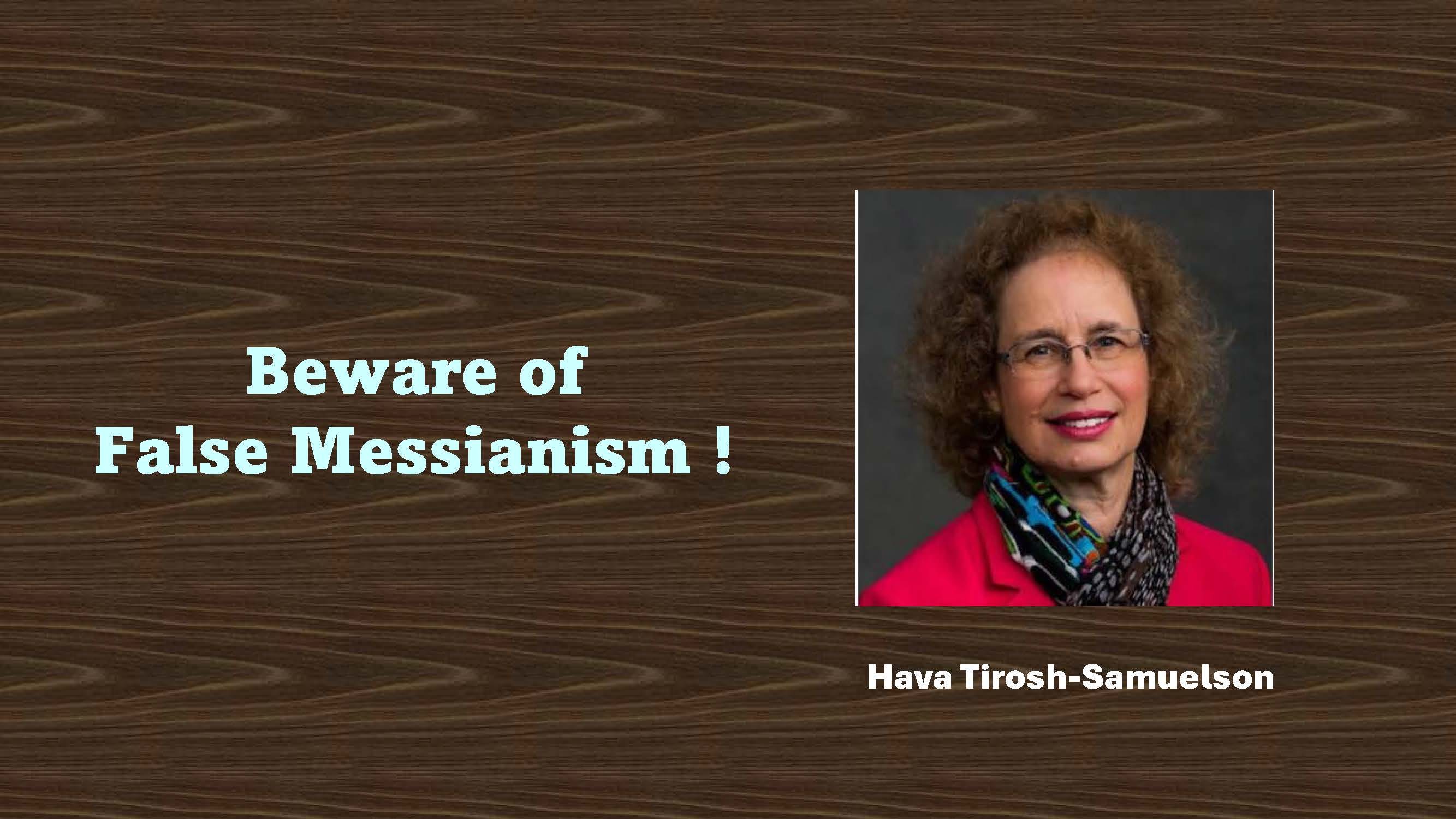
Hava Tirosh-Samuelson on the Sane Society
Hava Tirosh-Samuelson writes. I uphold the negative position on the debate proposition: Our global society should support the advance of AI technology for enhancing humanity and even generating a posthuman species. Whereas Pope Leo XIV conscientiously contends that advancing AI to superintelligence should be “disarmed,” I contend that AI research should be carefully regulated.
As a Jewish humanist, I am in full agreement with the pope’s Magnifica Humanitas: “our global society should not support the advance of AI technology for enhancing humanity and even generating a posthuman species.” The Pope’s call for “rigorous evaluation” of AI technology and his penetrating critique of AI’s negative impact on human life. Artificial Intelligence (AI) has profoundly transformed all aspects of life (e.g., transportation, communication, economics, finance, medicine, work, social life, culture, education, politics, and warfare). The ubiquity of AI reflects the triumph of transhumanism, a futuristic ideology that envisioned the planned obsolescence of the human species. At first, AI will generate “enhanced human beings,” a transhuman being, whose performance will exceed the limits of ordinary biological humans.
With further progress, the transhuman will morph into a posthuman “human-machine hybrid” who will eventually make biological humans obsolete. I have repeatedly argued that trans-posthumanism is a program for the planned obsolescence of humanity. For that reason alone, transhumanism deserves to be rigorously evaluated and its major accomplishment, AI, should be carefully regulated.
The Pope’s call for regulation of AI is very welcome, but it may have come too late. AI has already transformed all aspects of our lives. Some impact of AI technology has been positive, especially in medicine, an area in which AI has functioned in a life-affirming way. I oppose AI because of its broad-ranging negative impact on many aspects of human life. Politically, AI has brought about the rise of a new class of tech oligarchs who amassed unprecedented political power. AI is also used by authoritarian regimes to surveil and oppress political critics and opponents.
Economically, AI has caused major disruptions, massive losses of jobs, alienation from one’s own productive labor, exploitation, and fraud. Socially, AI has frayed social bonds, increased inequality and injustice, exploited vulnerable populations, made deception rampant, exacerbated aggression and violence, and increased loneliness, depression, and hopelessness.
Culturally, AI has undermined education by robbing young people of their creativity and making them less able to think on their own. Environmentally, AI technology siphons off precious natural resources, especially water and rare-earth minerals, exacerbating our ecological crisis.
And psychologically, AI, especially as used in social media, has turned youth and adults into aggressive and abusive people who lack empathy and compassion. Our AI-saturated world has become very bleak indeed.
What can we still do? First, as the Pope stated, we must educate ourselves about AI and about transhumanism, the futuristic ideology that legitimizes it. Only when we fully grasp what is at stake will we be able to regulate AI and monitor the evolution of this technology. Second, we should focus our critique on the makers of AI, the new oligarchs who are idolized and venerated.
However, they are not gods, and they too will eventually die even though they fantasize about eternal life. Until then, the makers of AI must be accountable for the damage they have wrought, and the misery they have inflicted. Third, we must appropriately tax technology corporations to create funds to remediate the damage inflicted. We must compensate those who lost their livelihood and those whose products were fraudulently exploited to train AI, so it could reach human intelligence.
Fourth, we need to subject trans/posthumanism, the ideology that gave us AI to a scathing critique, exposing not only its problematic assumptions about human life but also its necrophilous orientation. Transhumanism gave us AI, but AI is not a life-affirming technology. AI spreads destruction and death.
The cybernetic revolution of the 1950s culminated in AI. In 1955 the Jewish philosopher, psychoanalyst, and social theorist Erich Fromm (1900-1980) published The Sane Society. In this work, Fromm called humanity to face the choice between robotism and humanism. This prescient thinker, who was at the forefront of the campaign against the nuclear arms race, correctly assessed that “we are in danger of the destruction of all civilization, or of robotization” (italics in the original). Seven decades later, his prophecy, alas, has become a reality. Fromm ended his book by reminding humanity that “a small tribe was told thousands of years ago: ‘I put before you, life and death, blessing and curse—and you should choose life ‘” (Deuteronomy 30:19).
Regarding AI, this is now our choice and our responsibility. Let’s act responsibly so that our descendants and we will be able to live in a sane society.
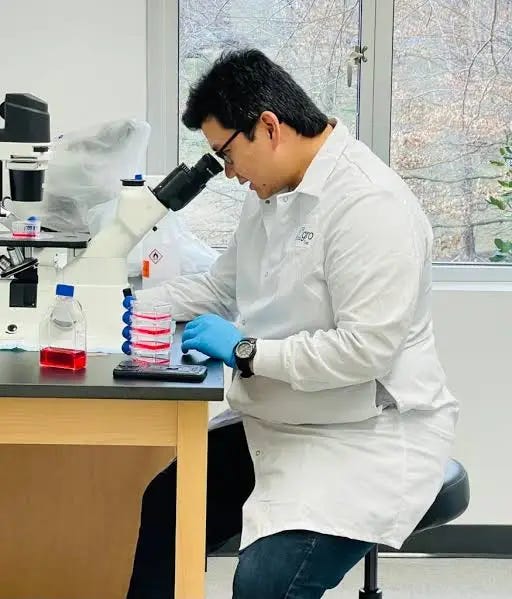
Rebuttal to Hava Tirosh-Samuelson by Arvin Gouw
Arvin Gouw writes. As always, Hava Tirosh-Samuelson provides a distinct critique of transhumanism and AI. I am here asked to respond to Hava, and I have several things that I would like to question, even though I am sure that she has thought about these herself.
The first issue that I would like to raise is that Hava, in this particular article, tends to conflate artificial intelligence, enhancement—whether it is technological or biological enhancement— transhumanism, and posthumanism. These are not all the same. By conflating these ideas together, she is implying that there is some sort of technological determinism at work.
I beg to differ. Why? Because AI as a tool is different from morphological enhancement or transhumanism. To illustrate, here is an example I select from my work as a medical researcher. AI-assisted cancer diagnosis is not the same as posthumanism or even transhumanism. Gene therapy, even though it could be considered therapeutic enhancement in some circumstances, is not replacing humanity. Neuroprosthetics restoring paralysis is treatment, not enhancement.
So these are subtle distinctions that need to be clarified when we are considering how AI is related to transhumanism and, furthermore, posthumanism. If we don’t do that, then we kind of fall into this fatalistic technological determinism that Hava pointed out, in which AI leads to enhanced humans, which leads to posthumans, and finally to the extinction of Homo sapiens. This is not a done deal.
I don’t think that history should be read deterministically in this sense, or that current developments will determine for sure the trajectory of history itself. Ironically, Hava’s position paper criticizes transhumanists for believing in the inevitability of progress while Hava herself is also proposing almost an equally inevitable narrative of destruction. So both sides risk reading history as deterministically fatal.
Now, beyond the underlying assumption that Hava brought into her paper, I would also like to point out that, even though I know she is very well aware of this, the problems of inequality, misinformation, alienation, and exploitation are not unique to AI. In fact, these societal problems can be attributed to bigger systems. These are old systems that have been a perennial problem in the history of humanity. These include concentrated capital, surveillance capitalism, militarization, regulatory failure, amongst many other things. So, it is not fair to simply blame every inequality on AI. Even so, I agree with her that AI is not always helping the situation. Rather than blaming AI directly, I recommend we think about who owns AI, who benefits from AI, and who bears the risks.
On this matter, I also agree with Pope Leo XIV that Catholic social teaching and Christian theology are very helpful in thinking through these problems.
Another interesting aspect of Hava’s argumentation is based on a very specific notion of human nature. For her, human nature is quite static. She presumes the importance of preserving present biological humanity as a moral goal in itself. With this as an assumption, it makes it difficult to look at enhancement as something that does not alter human nature. It is her theological anthropology that makes her reluctant to be open to transhumanism.
In contrast, if we take a more eschatological orientation toward what it means to be human, then we would anticipate transformation by divine grace. This transformation might entail further technological advances.
Let’s turn to epistemology. I think as a Barthian. So, my approach does not begin with human nature. To begin with anthropology would be an exercise in natural theology. Instead, I begin with what revealed theology has made known about Jesus Christ. Jesus Christ provides the eschatological imago Dei, exhibiting the true human nature that God has envisioned. Might we conceive of AI within the scope of divine providence within history contributing to this future transformation?
We need to be cautious, to be sure. Barth reminds us that one should not conflate history with the theological unfolding of God’s covenant and God’s creatio continua, because God will always challenge any ideology that is presented by history.
My rebuttal comments do not actually constitute a rebuttal. This is not a criticism of Hava, who has been, in many ways, my own teacher on the interaction between theology and science. Let me affirm three valuable insights here from Hava. First, enhancement and transhumanism can become a form of Pelagian self-salvation. Second, technological progress is not equivalent to moral progress, so we should beware of false messianism. Third, AI must be judged by its effects on the vulnerable and through the lens of the common good. These three takeaways could lead us to a sane society.
Thank you, Hava, for expanding the AI discussion at this momentous moment.
Substack PT 1028. Debating AI, Post-Humanity, and Hava Tirosh-Samuelson. Should we confer dignity on the superintelligent posthuman? Episode 8
Substack PT 1021. Debating AI, Post-Humanity, and Magnifica Humanitas. Should we confer dignity on the superintelligent posthuman? Episode 1
Substack PT 1022. Debating AI, Post-Humanity, and Arvin Gouw. Should we confer dignity on the superintelligent posthuman? Episode 2
Substack PT 1023. Debating AI, Post-Humanity, and Augustine Pamplany. Should we confer dignity on the superintelligent posthuman? Episode 3
Substack PT 1024. Debating AI, Post-Humanity, and Ilia Delio. Should we confer dignity on the superintelligent posthuman? Episode 4
Substack PT 1025. Debating AI: Rebuttal to Ilia Delio by Michael E Zimmerman. Should we confer dignity on the superintelligent posthuman? Episode 5
Substack PT 1026. Debating AI. Noreen Herzfeld asks: Is Claude Conscious? Should we confer dignity on the superintelligent posthuman? Episode 6
Substack PT 1027. Debating AI, Post-Humanity, and Ahmed Khater. Should we confer dignity on the superintelligent posthuman? Episode 7
Substack PT 1028. Debating AI, Post-Humanity, and Hava Tirosh-Samuelson. Should we confer dignity on the superintelligent posthuman? Episode 8

▓
Meet Ted Peters. For Substack, Ted Peters posts articles and notices in the field of Public Theology. He is a pastor in the Evangelical Lutheran Church in America and an emeritus professor at Pacific Lutheran Theological Seminary and the Graduate Theological Union. His single-volume systematic theology, God—The World’s Future, is now in its 3rd edition. He has also authored God as Trinity plus Sin: Radical Evil in Soul and Society as well as Sin Boldly: Justifying Faith for Fragile and Broken Souls. Peters edited The Promise and Peril of AI and IA: New Technology Meets Religion, Theology, and Ethics (ATF 2025), and he recently published The Voice of Public Theology, also with ATF Press. Soon to be released is a volume of essays, A Handbook on Astrobiology, Astrotheology, and Astroanthropology, co-edited with Carolina Azucena Sanz de la Fuente and Arvin Gouw, with Amsterdam University Press.
See his website: TedsTimelyTake.com and Patheos blog site.
▓
References
Delio, Ilia. 2026. “Teilhard de Chardin on Technology and Human Evolution.” In Technologies of the Future Self: An Ethics for Transhuman Flourishing, eds., Georg Theiner and Alcibiades Malapi-Nelson, 335-362. New York: Palgrave Macmillan.
Fromm, Eric. 1955. The Sane Society. New York: Reinhart.
Gouw, Arvin. 2022. “Epilogue: Introducing a New Transhumanist Theology.” In Religious Transhumanism and Its Critics, eds., Arvin M. Gouw, Brian Patrick Green, and Ted Peters, 409-424. Lanham, MD: Lexington.
Herzfeld, Noreen. 2024. “The Eschatological Future of Artificial Intelligence: Savior or Apocalypse?” Eds., Beth Singler and Fraser Watts. Cambridge Companion to Religion and Artificial Intelligence. Cambridge UK: Cambridge University Press, 148-164.
Hughes, James. 2022. “Unitarian Universalists as Critical Transhumanists.” In Religious Transhumanism and Its Critics, eds, Arvin M. Gouw, Brian Patrick Green, and Ted Peters, 87-100. Lanham, MD: Lexington.
Krüger, Oliver, 2024. “Posthumanism and Digital Religion,” in Oxford Handbook of Digital Religion, eds., Heidi A. Campbell and Pauline Hope Cheong. Oxford: Oxford University Press, 544-561.
Peters, Ted. 2005. “Dignity.” Encyclopedia of Science, Technology, and Ethics, ed. by Carl Mitcham. New York: Macmillan, Thomson, Gale, 2:528-530.
Peters, Ted, and Gaymon Bennett. 2003. “Defining Human Life: Cloning, Embryos, and the Origins of Human Dignity.” Beyond Determinism and Reductionism, ed. by Mark L.Y. Chan and Roland Chia. Adelaide, Australia: ATF Press, 56-73.
Peters, Ted, ed. 2024. The Promise and Peril of AI and IA: New Technology Meets Religion, Theology, and Ethics. Adelaide: ATF.
Peters, Ted, 2026. “Our Future Self: Cyber Enhancement and Spiritual Transformation,” eds., Georg Thiener and Alcibiades Malapi-Nelson, Technologis of the Future Self: An Ethic for Transhuman Flourishing. New York: Macmillan Praeger, 271-294.
Pope Francis. September 25, 2020. “Address of His Holiness Pope Francis to the 75th Session of the United Nations General Assembly.”
Pope Leo XIV. 2026. “Magnificata Humanitas.”
Tirosh-Samuelson, Hava. 2022. “The Transhumanist Pied Pipers: A Jewish Caution against False Messiahism.” In Religious Transhumanism and Its Critics, eds., Arvin M. Gouw, Brian Patrick Green, and Ted Peters, 183-214. Lanham, MD: Lexington.